
Blog
NeoCOAT Singapore: How This Coating Boosts Solar Panel Efficiency on Roofs

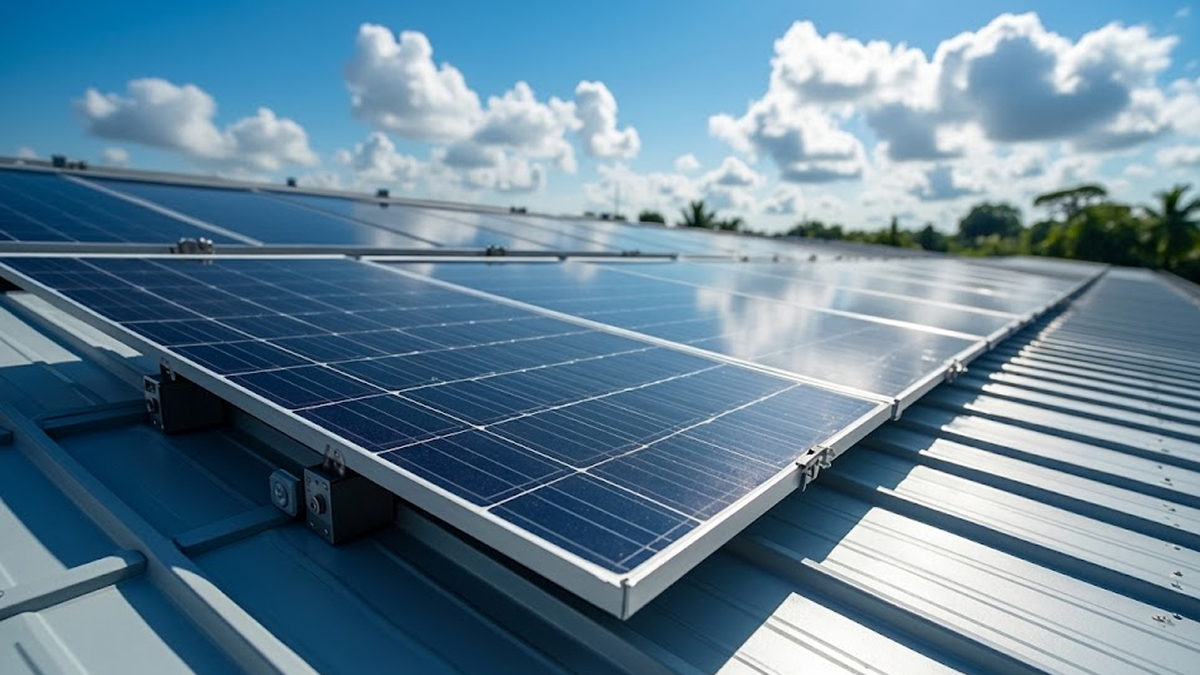
Table of Contents
NeoCOAT Singapore serves as a vital heat-management solution at a time when solar energy adoption across the city-state has accelerated in recent years, driven by rising electricity costs, sustainability targets, and strong government support. Under initiatives such as the SolarNova programme by the Housing & Development Board (HDB), solar deployment across public and private buildings continues to expand, positioning rooftop solar as a key component of Singapore’s energy transition.
However, while many building owners focus on panel efficiency and system size, a critical factor is often overlooked: the condition and thermal behaviour of the roof beneath the solar installation. In Singapore’s tropical climate, where high temperatures and solar irradiance are constant, roof heat can directly influence how well a solar system performs in real-world conditions.
This is where the technology becomes uniquely relevant. Rather than being treated as just a coating, it can be positioned as a practical solution that supports better solar performance while contributing to long-term property value. For building owners, this means looking beyond the solar panels alone and considering how roof conditions influence overall system efficiency.
Why Roof Heat Affects Solar Panel Efficiency
Solar panels are typically rated under standard test conditions referenced to 25°C, but actual rooftop operating conditions are often much hotter. The U.S. Department of Energy’s guide to solar photovoltaic system performance explains that module output is affected by a temperature coefficient, meaning performance falls as operating temperature rises above the reference condition.
That matters even more on heat-retaining roofs. Metal roofing absorbs solar heat quickly and can remain hot during peak daylight hours, increasing the thermal load around the solar array. In practical terms, this means the panels may generate less electricity than expected during the very hours when solar irradiance is strongest. For a property owner, that turns roof heat into more than a technical issue. It becomes an efficiency and ROI issue. NeoCOAT is useful in this context because it addresses the roof surface itself, helping reduce the heat burden that can undermine solar performance on metal roofs by transferring heat energy to kinetic energy.
How NeoCOAT Supports Better Solar Performance
NeoCOAT supports solar panel efficiency by helping the roof manage heat more effectively. Instead of treating the metal roof as a passive surface beneath the solar array, NeoCOAT allows it to become part of the performance strategy. By improving thermal behaviour at roof level, NeoCOAT helps create more stable operating conditions for rooftop solar systems installed on metal structures. A study on photovoltaic panel cooling techniques shows that most photovoltaic panels lose approximately 0.3% to 0.5% efficiency for every 1°C increase above standard operating temperature.
In Singapore’s tropical climate, where rooftop temperatures can rise significantly during midday hours, this thermal loss can materially affect long-term solar energy output. Studies on photovoltaic temperature coefficients consistently show that higher operating temperatures reduce solar panel efficiency and power output. The performance principle is important because temperature-driven losses are a recognised feature of photovoltaic operation, not a niche or speculative concern.
This is also why NeoCOAT should be discussed differently from a generic cool-roof product. In a Singapore solar context, NeoCOAT’s value goes beyond roof protection. By helping to manage heat at the roof level, it can support the operating environment of the solar PV system above, which matters in Singapore because SERIS notes that PV module temperatures in tropical conditions can exceed 60°C during daytime. For warehouses, factories, logistics facilities, and other metal-roof buildings, NeoCOAT becomes a way to strengthen the rooftop environment that solar panels depend on every day.
Why NeoCOAT Matters for Solar ROI in Singapore
For many building owners, rooftop solar is approved based on projected savings and payback. If the actual system runs hotter than expected and produces less electricity, those savings can be diluted over time. Research cited in a Fraunhofer ISE report (will upload pdf) shows that photovoltaic modules commonly exhibit temperature-related efficiency losses, with typical temperature coefficient ranges that can materially affect yield in warm conditions.
In Singapore, that makes NeoCOAT more than a maintenance or coating choice. It becomes part of protecting the financial performance of the solar investment. By helping moderate the roof’s thermal impact, NeoCOAT can support more consistent output from panels mounted on metal roofs. On larger rooftops, even modest improvements in operating conditions can matter because small percentage differences in output can add up over the life of the system. For property owners evaluating rooftop solar at scale, NeoCOAT offers a practical way to strengthen the conditions that support expected returns.
NeoCOAT as a Property Performance Upgrade
NeoCOAT Singapore also fits into a broader property-performance discussion. In Singapore, building efficiency is increasingly assessed through integrated frameworks such as BCA Green Mark and the wider Singapore Green Building Masterplan, both of which place emphasis on stronger energy performance and more sustainable building outcomes. Green Mark is explicitly designed as Singapore’s green building rating system for evaluating environmental impact and performance, while the Green Mark 2021 standards raise energy performance expectations across the built environment.
From this angle, NeoCOAT is not only about helping solar panels work better. It also supports the performance of the building envelope itself. For owners of commercial and industrial assets, that matters because the roof is not just overhead protection. It is part of the building’s long-term operating efficiency, maintenance profile, and asset value. When NeoCOAT is used on a metal roof carrying solar panels, it helps align rooftop infrastructure with both energy-generation and building-performance goals.
Planning and Application Still Matter
Even with the right product, implementation matters. The IEA PVPS operation and maintenance guidance highlights the importance of checking roof condition, mounting hardware, watertightness, corrosion, and related defects that can affect long-term system reliability. In coating practice, standards such as ASTM D3359 for adhesion testing and ASTM D7091 for non-destructive dry film thickness measurement are commonly used to verify coating performance and application quality.
So while NeoCOAT can support better solar panel efficiency on metal roofs, it should still be applied as part of a properly assessed roof system. For building owners, that means starting with a professional evaluation of roof condition, solar mounting details, and coating suitability before moving into application.
Conclusion
NeoCOAT offers a practical way to address heat buildup on metal roofs supporting solar panel systems in tropical climates. By helping to lower roof surface temperatures, it can create better operating conditions for photovoltaic systems and support more consistent energy performance over time. However, long-term results depend on proper planning, careful surface preparation, correct application, and close attention to detailing around seams, penetrations, and mounting areas. When specified and applied correctly, this approach can help property owners improve roof thermal performance while supporting the durability and efficiency of their solar investment.
To find out whether NeoCOAT is suitable for your metal roof and solar panel setup, contact Delta Sirius team for a professional assessment.
FAQs
How does NeoCOAT improve solar panel efficiency on metal roofs?
NeoCOAT improves solar panel efficiency by reducing the amount of heat retained on metal roof surfaces. In Singapore’s tropical climate, excessive roof heat can increase the operating temperature of solar panels, which reduces their efficiency. By improving the roof’s thermal performance, NeoCOAT helps create a more stable environment for solar panels, allowing them to generate electricity more consistently throughout the day.
Do solar panels really lose efficiency in high temperatures?
Yes. Solar panels are tested under standard conditions of around 25°C, but in real-world environments like Singapore, operating temperatures are often much higher. As temperatures increase, panel efficiency decreases due to the temperature coefficient of photovoltaic modules. This means that hotter conditions can reduce energy output, especially during peak sunlight hours.
Is NeoCOAT suitable for all types of roofs in Singapore?
NeoCOAT is most suitable for metal roofs, particularly those used in commercial and industrial buildings such as warehouses and factories. These roofs tend to absorb and retain more heat, making them ideal candidates for thermal optimisation. A professional assessment is recommended to determine suitability based on roof condition, material, and existing solar installation.
How long does NeoCOAT last on metal roofs, and what maintenance is required?
NeoCOAT typically lasts 5 to 10 years under standard commercial conditions when properly applied. The coating maintains its heat exchange functions even with surface dirt accumulation, though routine maintenance with neutral pH cleaning solutions is recommended to maximise longevity and prevent mechanical damage.
Besides metal roofs, can NeoCOAT be applied to other types of surfaces?
Yes. While NeoCOAT is commonly used on metal roofs, certain variants and plication systems may also be suitable for selected concrete, cementitious, and tiled roof surfaces, subject to substrate condition and site assessment. Beyond thermal management, protective roof coatings can also help reduce long-term exposure to UV, moisture, and weather-related deterioration. As surface compatibility and preparation requirements vary, a professional evaluation is recommended before application.